Executive car service offers more than luxury—it provides critical security layers most high-profile travelers overlook, from vetted drivers to confidential transit protocols.
Share:
Summary:
Over 80% of attacks on VIPs happen around the vehicle. Not in office buildings with security systems. Not in hotels with surveillance. In transit.
When you’re moving between locations, you’re predictable. Your route can be studied. Your timing can be tracked. And unlike controlled environments where security teams can sweep rooms and monitor access points, ground transportation puts you in public space where threats are harder to identify and control.
Road traffic incidents kill more traveling executives than any other risk factor. Between 2016 and 2022, vehicle crashes accounted for 959 deaths of American citizens abroad. Add in the risks of theft, assault, kidnapping attempts, and opportunistic crimes, and the picture becomes clear: the car you choose isn’t just about getting somewhere—it’s about getting there safely.
Here’s what separates a professional executive chauffeur from someone who just drives for a living: the vetting process before they ever get behind the wheel.
We conduct comprehensive background checks that go far beyond what rideshare platforms require. We’re talking full criminal history screening, driving record verification going back years, substance abuse testing, and continuous monitoring throughout employment. Some services even require security clearances for clients in sensitive positions.
Compare that to rideshare drivers, where background checks are minimal at best. Many locations lack specific regulation or licensing requirements. The screening that does exist often fails to catch concerning patterns because it’s not thorough enough to matter when your safety is on the line.
But background checks are just the starting point. Our professional chauffeurs undergo defensive driving training, learn emergency response protocols, and receive instruction in executive protection methodologies. They’re trained to spot suspicious behavior before it becomes a threat. They know how to handle high-pressure situations without escalating them. They understand that their job isn’t just driving—it’s maintaining a secure environment from pickup to destination.
The difference shows up in the details most passengers never notice. A professional security driver checks the vehicle for tampering before you get in. They vary routes to avoid predictable patterns. They position the vehicle strategically at pickup and drop-off points. They stay alert to their surroundings in ways that matter when seconds count.
When you’re in Mercer County, NJ traveling between Princeton’s corporate centers and Trenton’s government offices, or heading to Newark or JFK for an international flight, you need someone who understands that transportation security isn’t about paranoia—it’s about professional preparation for scenarios that, while unlikely, carry consequences you can’t afford.
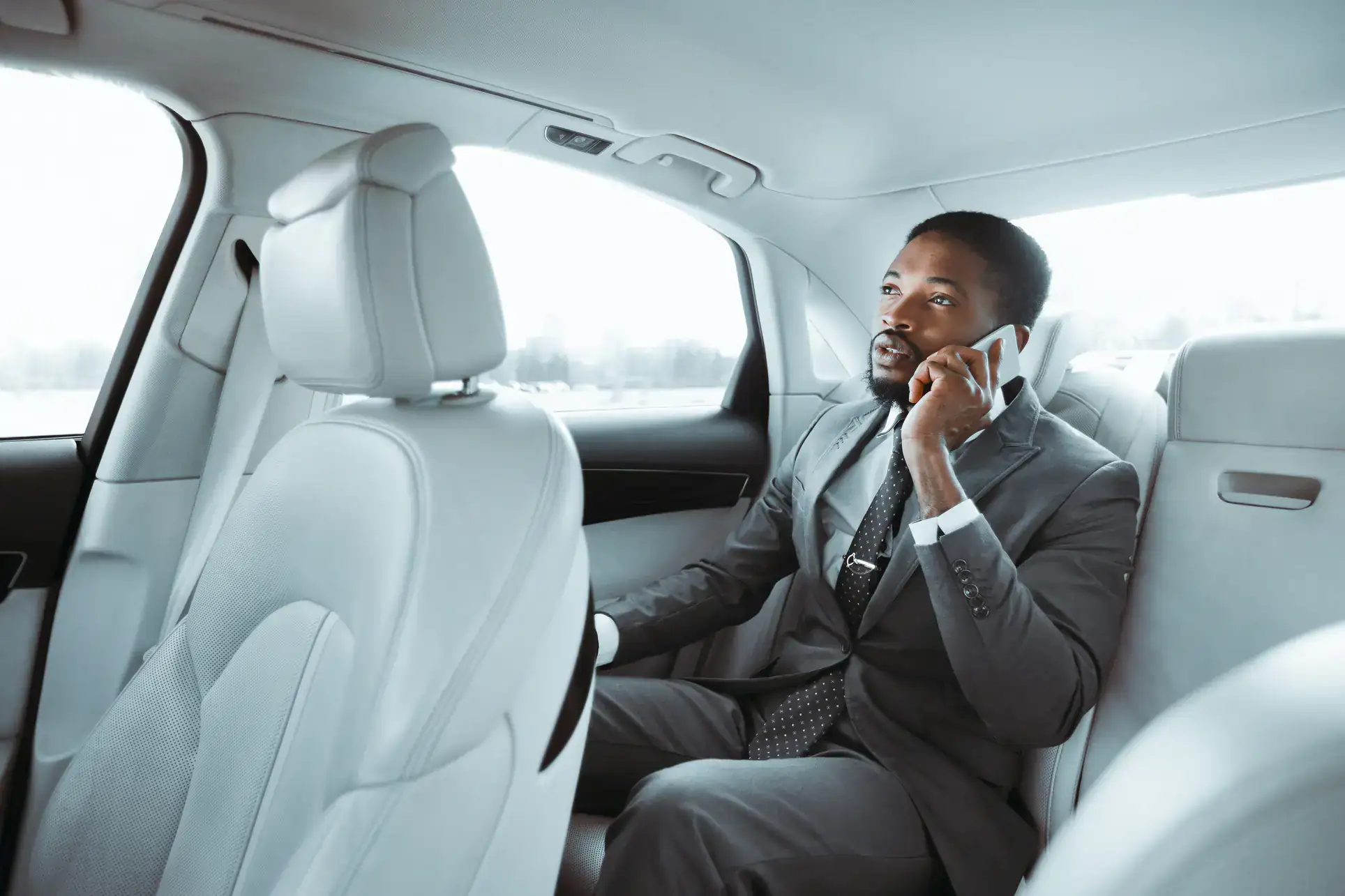
You take important calls in the car. You discuss sensitive deals, personnel decisions, strategic moves that could impact your company’s stock price. The question is: who’s listening?
With rideshare services, drivers can now record conversations. There’s no legal protection for the business intelligence you’re discussing. The person behind the wheel is essentially a stranger with no obligation to protect your confidentiality. You’re trusting your most sensitive information to someone who might share details with anyone, intentionally or not.
We handle this differently. We require our chauffeurs to sign non-disclosure agreements—legal contracts that create enforceable confidentiality protections. These aren’t symbolic gestures. They’re binding agreements that carry real consequences if violated.
We go further. Our chauffeurs receive specific training in discretion and confidentiality protocols. They understand what they’re hearing matters. They’re taught to maintain professional distance, to avoid engaging in conversations unless addressed, to treat every ride as if it contains information that could move markets—because it often does.
Think about what you discuss in transit. Merger talks. Acquisition strategies. Personnel changes at the executive level. Earnings before they’re announced. Legal matters. Competitive intelligence. Any of this information in the wrong hands creates risk you can’t quantify until it’s too late.
The average S&P 500 CEO’s compensation is $16.7 million annually. That breaks down to $133.80 per minute. When you’re discussing business that operates at that level, the person driving needs to understand what’s at stake. They need legal obligations to maintain silence. They need training in what confidentiality actually means in practice.
For executives operating in Mercer County’s growing biotech and pharmaceutical sectors, where proprietary information and research developments carry massive value, confidentiality during transit isn’t optional. It’s essential infrastructure for protecting intellectual property and competitive advantages.
Standard transportation doesn’t offer this protection. We build it into every ride.
Want live answers?
Connect with a Jersey Car & Limo expert for fast, friendly support.
Most high-profile travelers don’t need armored vehicles for daily commutes. But when threat levels elevate, when you’re traveling in high-risk areas, or when your profile attracts unwanted attention, having access to enhanced security options changes the equation entirely.
Armored vehicles aren’t what most people imagine. Modern executive protection vehicles look like standard luxury SUVs and sedans. They blend into traffic. They don’t announce themselves. But they’re built with ballistic protection ranging from handgun resistance to armor-piercing rifle protection, depending on the threat level you’re addressing.
The decision to use armored transportation isn’t about fear. It’s about matching security measures to actual risk. Corporate executives facing elevated threats, government officials, diplomats, and individuals with credible security concerns all benefit from having these options available when circumstances warrant them.

Our professional security drivers do more than follow GPS directions. They’re trained in threat assessment, route planning, and real-time risk mitigation that standard drivers simply don’t understand.
Before your ride even begins, a security driver has already done advance work. They’ve plotted three separate routes to your destination—a primary route, an alternate if traffic or conditions change, and an emergency route if something goes wrong. They’ve identified safe havens along each route. They’ve noted hospital locations. They’ve checked current threat intelligence for your area and adjusted planning accordingly.
During the ride, they’re constantly scanning for surveillance. They notice vehicles that follow too long. They spot behavioral patterns that indicate potential problems. They understand counter-surveillance techniques that help them determine if you’re being tracked or targeted.
If something does go wrong—a medical emergency, a security incident, unexpected civil unrest—they know how to respond. They’ve trained in defensive and evasive driving techniques modeled after Secret Service protocols. They understand how to extract you from dangerous situations. They can execute emergency evacuation plans without hesitation.
This level of preparation matters most when you don’t need it—because the point is making sure you never do. But when circumstances change suddenly, when the unexpected happens, having a driver who knows how to handle high-pressure situations without panic makes the difference between a close call and a serious incident.
For executives traveling through Mercer County, NJ to meetings in Manhattan or Philadelphia, or managing complex multi-stop itineraries across New Jersey, this real-time risk management happens invisibly. You’re focused on your work. Your driver is focused on making sure nothing interrupts it.
Here’s a number that should concern anyone using rideshare for business travel: $125,000. That’s the typical coverage limit for suburban rideshare services. Compare that to professional executive car services, which carry $1 million policies underwritten by A+ rated insurers.
The difference isn’t just about money. It’s about what that coverage represents. Higher insurance requirements mean stricter safety standards. More rigorous driver vetting. Better maintained vehicles. More comprehensive training programs. Insurance companies don’t issue million-dollar policies to operations that cut corners.
When you’re transporting executives or handling corporate liability, this matters. Many corporate travel policies specifically require pre-vetted, licensed, and insured transportation providers. Rideshare services often don’t meet these requirements, which means using them creates compliance issues your company’s risk management team would rather avoid.
We also maintain commercial insurance that covers business use specifically. Rideshare insurance often has gaps in coverage during certain periods of the ride. Personal auto insurance typically excludes commercial use entirely. These coverage gaps create liability exposure that businesses can’t afford.
Beyond insurance, we maintain detailed records of driver qualifications, vehicle maintenance, and safety protocols. We have systems for incident reporting and response. We work with corporate security teams to meet specific compliance requirements. This documentation matters when you’re managing duty of care obligations for traveling executives.
The liability protection extends to vehicle condition as well. Our professional fleet undergoes regular safety inspections and preventive maintenance on fixed schedules. Vehicles are replaced based on mileage and age standards, not driven until they break down. This maintenance discipline reduces the risk of mechanical failures that could leave you stranded or, worse, cause accidents.
When you’re booking executive transportation in Mercer County, NJ for high-stakes meetings or critical travel, the insurance and liability protection built into professional executive car service provides risk mitigation that budget options simply can’t match. You’re not just paying for a ride. You’re paying for the infrastructure that makes that ride as safe as ground transportation can be.
Ground transportation security isn’t about adding complexity to your schedule. It’s about removing risk during the moments when you’re most vulnerable. Professional executive car service builds security into every aspect of the experience—from driver vetting and confidentiality protections to real-time risk management and comprehensive insurance coverage.
The difference between standard transportation and secure executive service shows up in details most passengers never see. Background checks that actually screen for risk factors. Training that prepares drivers for scenarios beyond normal traffic. Legal protections for your confidential conversations. Access to enhanced security options when threat levels change.
For high-profile travelers in Mercer County, NJ and throughout New Jersey, these security measures aren’t optional extras. They’re essential infrastructure for protecting your safety, your privacy, and your business interests during transit. When you’re moving between Princeton’s corporate centers, Trenton’s government offices, or traveling to major airports, the transportation you choose either adds to your security or creates gaps in it.
At Jersey Airport Car And Limo, we understand what’s at stake when high-profile travelers are in transit. If you’re ready to discuss transportation that prioritizes security without compromising the professional service you expect, reach out to explore how our executive car service can address the specific security considerations your travel requires.
Article details:
Share:
Continue learning: