Not all limousine services meet New Jersey's strict licensing and insurance requirements. Understanding fleet diversity, safety standards, and driver certification helps you choose professional transportation.
Share:

Summary:
You’re looking at limousine options because you need transportation that actually shows up on time, driven by someone properly licensed, in a vehicle that won’t leave you stranded. Maybe it’s an airport run where missing your flight isn’t an option. Maybe it’s your wedding day. Maybe it’s a corporate event where image matters.
The problem is that “limousine service” can mean anything from a fully licensed, insured operation with background-checked chauffeurs to someone’s cousin with a nice car and zero accountability. New Jersey has specific requirements that separate professional services from everyone else, and understanding those differences protects you from liability, missed flights, and transportation disasters.
Here’s what actually matters when you’re evaluating limousine services, starting with the legal requirements that protect passengers.
New Jersey doesn’t let just anyone operate a limousine service. The state requires specific licensing, insurance minimums, and driver certifications that create accountability and protect passengers. When you book with a properly licensed company, you’re covered by regulations designed to keep you safe.
Unlicensed services skip these requirements entirely. That means no insurance protection if something goes wrong, no background checks on drivers, and no recourse when they cancel last-minute or fail to show up.
The licensing framework exists because limousines carry passengers for hire. That triggers commercial transportation regulations, which are significantly more strict than personal vehicle rules. Companies operating legally have jumped through multiple hoops to earn the right to transport you.

New Jersey municipalities require limousine companies to carry $1.5 million in liability insurance coverage. This isn’t a suggestion or a nice-to-have. It’s a legal requirement before any company can obtain a license to operate.
Why does this matter to you as a passenger? Because if you’re in an accident while riding in a properly insured limousine, that insurance covers injuries and damages. You’re protected. If you book with an unlicensed service or a rideshare driver operating under personal insurance, you may have zero coverage. Their personal auto policy likely excludes commercial activity, leaving you exposed to personal liability.
The $1.5 million requirement reflects the serious nature of commercial passenger transportation. Regular auto insurance policies typically cap at $100,000 to $300,000. Professional limousine insurance is designed specifically for the risks involved in transporting multiple passengers regularly.
We file proof of insurance with local municipalities and maintain continuous coverage. If our insurance lapses, our license gets suspended. This creates ongoing accountability that doesn’t exist with unlicensed operators.
When you call a limousine company, you can ask for proof of insurance and their license number. Professional operations provide this information immediately because we’re proud of our compliance. If someone hesitates or can’t produce documentation, that’s your signal to book elsewhere.
The insurance requirement also means that legitimate limousine companies have been vetted by insurance carriers. Insurance companies don’t issue $1.5 million policies to fly-by-night operations with questionable safety records. They investigate the business, review vehicle maintenance protocols, and assess driver qualifications before issuing coverage. That vetting process adds another layer of protection for you.
Every chauffeur working for a licensed New Jersey limousine company must complete MVC (Motor Vehicle Commission) certification. This process includes fingerprinting and a state criminal background check. It’s not optional, and it’s not something drivers can skip.
The MVC certification requirement went into effect to address safety concerns in the for-hire transportation industry. Before you get into a limousine, the driver has been fingerprinted, their criminal history has been reviewed, and the state has certified them as qualified to transport passengers commercially.
This differs dramatically from rideshare services, where background checks may be less thorough, or from unlicensed services where no background check happens at all. When you book a professional limousine service in New Jersey, you know the person driving has cleared state-level vetting.
The fingerprinting process connects to state and federal databases. It’s not just a quick online check. It’s a comprehensive review that takes time and costs money, which is why unlicensed operators avoid it. We invest in this process for every single driver because it’s required to operate legally.
Drivers who work for multiple limousine companies only need one MVC certification, but they must maintain it continuously. If a driver’s certification lapses or gets revoked, they can’t legally operate a limousine in New Jersey. This creates ongoing accountability.
The certification also requires employers to submit documentation for each driver. Companies can’t hire someone and put them behind the wheel the next day. There’s a waiting period while the background check processes. This built-in delay forces companies to plan ahead and maintain qualified driver pools rather than scrambling to cover trips with whoever’s available.
For passengers, this means the person picking you up has been vetted by the state. You’re not guessing about their qualifications or hoping they’re trustworthy. The state has already done that work, and we’ve invested in ensuring every chauffeur meets these standards.
When you book transportation for your family, your wedding party, or your corporate team, knowing that drivers have cleared MVC certification provides real peace of mind. It’s one of the fundamental differences between professional limousine services and alternatives that operate without proper licensing.
Want live answers?
Connect with a Jersey Car & Limo expert for fast, friendly support.
Not every occasion needs the same vehicle. A solo business traveler heading to Newark airport has different needs than a wedding party of eight or a corporate group of twelve. We maintain a diverse fleet specifically to match the right vehicle to your situation.
Fleet diversity matters because it affects your comfort, your costs, and whether the vehicle actually fits your group. A company that only offers one type of vehicle forces you to pay for capacity you don’t need or splits your group across multiple cars when one larger vehicle would work better.
Understanding your options helps you book appropriately and avoid overpaying for unnecessary capacity or dealing with cramped, uncomfortable rides because you chose a vehicle that’s too small.

Luxury sedans work for one to three passengers, typically business travelers or couples. These vehicles offer professional appearance, comfortable seating, and luggage capacity for airport transfers or corporate meetings. Sedans are the most economical option when you don’t need extra space.
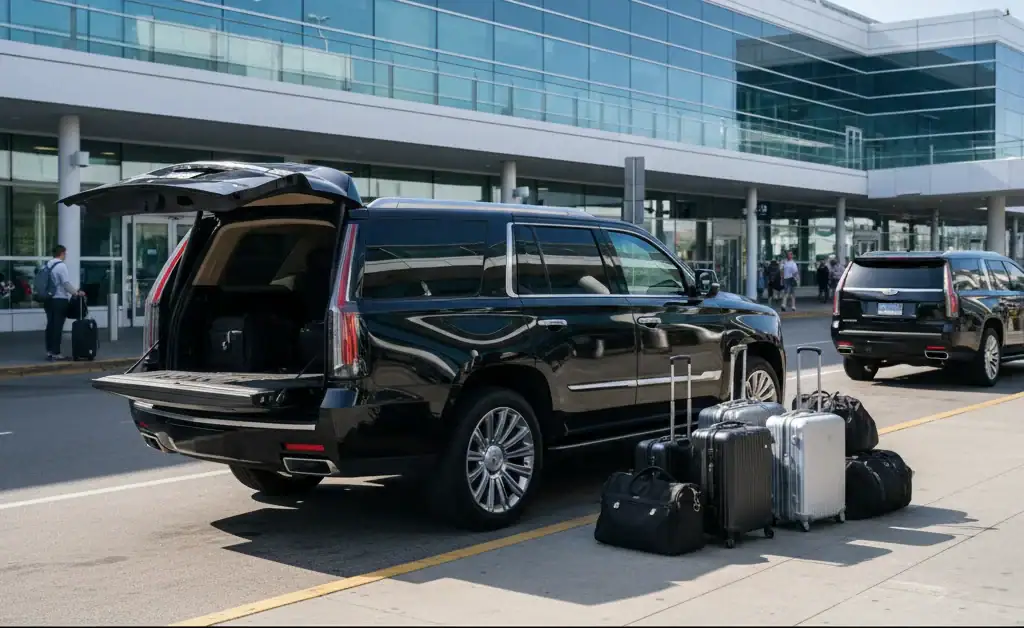
SUV limousines accommodate four to six passengers with more luggage room than sedans. Families traveling to airports, small wedding parties, or executive groups often choose SUVs because they provide extra space without the formality of a stretch limousine. The higher seating position and additional cargo capacity make SUVs practical for trips involving multiple suitcases or equipment.
Both sedans and SUVs represent the everyday workhorses of professional limousine fleets. They’re available 24/7, book quickly, and cost less than larger specialty vehicles. For airport transfers, corporate travel, and point-to-point transportation, these vehicles handle the majority of trips efficiently.
The key is matching passenger count and luggage to vehicle capacity. Three people with carry-ons fit comfortably in a sedan. Three people with checked bags plus golf clubs need an SUV. Four people heading to a wedding need an SUV to avoid wrinkling formal attire. We ask about passenger count and luggage during booking to recommend the appropriate vehicle.
We maintain late-model sedans and SUVs, not vehicles that are five or ten years old with high mileage. Monthly inspections and regular maintenance keep these vehicles reliable. You shouldn’t encounter mechanical issues, strange noises, or cleanliness problems when you book with a properly operated service.
Pricing for sedans and SUVs typically runs lower than stretch limousines or specialty vehicles. For airport transfers, we often quote flat rates rather than hourly charges. This makes budgeting straightforward. You know the cost before you book, and that rate doesn’t change based on traffic or weather.
When you’re evaluating limousine services, ask about their sedan and SUV options. A company that maintains multiple vehicle types in these categories can accommodate last-minute changes if your passenger count shifts or if your preferred vehicle isn’t available for your time slot.
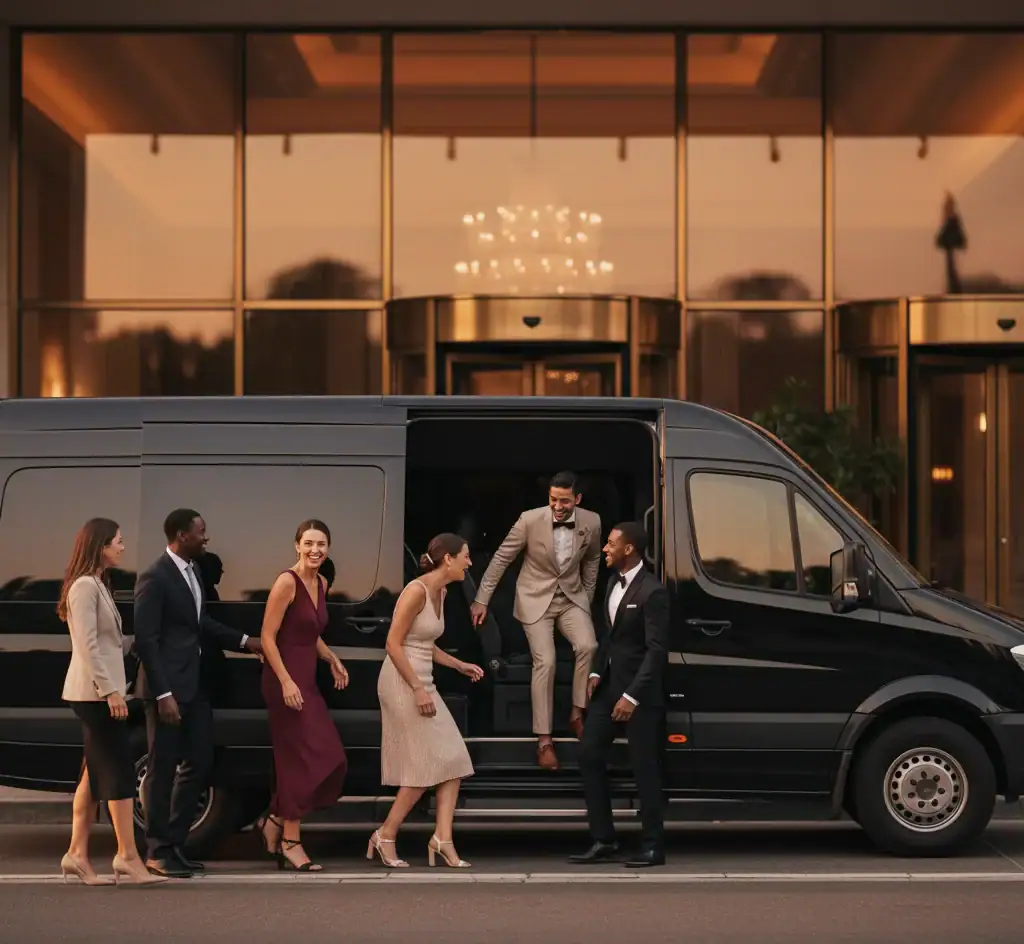
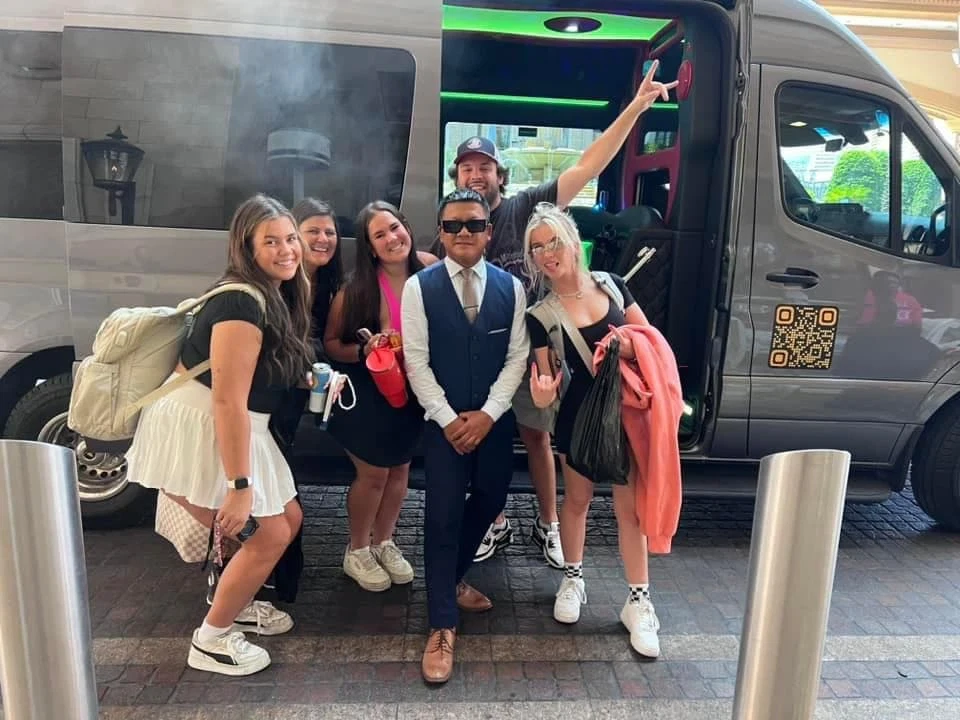
Sprinter vans and executive shuttles accommodate eight to fourteen passengers, making them ideal for wedding parties, corporate groups, or family airport transfers where everyone needs to travel together. These vehicles offer the capacity of a small bus with the comfort and amenities of a luxury limousine.
The advantage of keeping groups together in one vehicle goes beyond convenience. It ensures everyone arrives simultaneously, eliminates coordination headaches, and often costs less than booking multiple smaller vehicles. For weddings, having the entire bridal party or groomsmen in one Sprinter means no one gets left behind and everyone experiences the same service level.
Sprinter vans have become increasingly popular for corporate transportation because they combine professional appearance with practical capacity. When you’re moving an executive team to an off-site meeting or transporting clients from the airport to your office, a Sprinter presents a polished image while accommodating everyone comfortably.
These vehicles typically feature individual seating rather than bench seats, climate control, and enough headroom to stand while entering or exiting. That matters when passengers are wearing formal attire or business suits. Luggage capacity in Sprinters significantly exceeds SUVs, which is critical for airport transfers involving multiple travelers with checked bags.
For pricing, Sprinters and large capacity vehicles usually operate on hourly rates with minimum booking periods. Wedding packages might include three to five hours. Corporate charters might book for a full day. The hourly rate reflects the vehicle’s capacity and the fact that it’s removing a major asset from the fleet for an extended period.
When you’re planning group transportation, confirm the actual passenger capacity and luggage space. A vehicle rated for twelve passengers might not comfortably fit twelve people plus their luggage. We help you calculate realistic capacity based on your specific situation rather than just quoting maximum seat count.
Sprinter availability can be more limited than sedans or SUVs because fewer companies maintain them in their fleets due to higher acquisition and maintenance costs. If you need a Sprinter for a specific date, especially during peak wedding season or busy corporate travel periods, book well in advance. These vehicles fill up quickly because they serve a specific niche that smaller vehicles can’t handle.
The driver qualifications for operating Sprinters are the same as for other limousine vehicles in New Jersey – MVC certification, background checks, and commercial licensing. The difference is that experienced chauffeurs who regularly drive larger vehicles understand the handling characteristics and space requirements, which matters when navigating tight pickup locations or urban areas.
Professional limousine services separate themselves through licensing compliance, insurance coverage, certified chauffeurs, and fleet diversity. These aren’t marketing points. They’re legal requirements and operational standards that protect you from liability and ensure reliable transportation.
When you book a limousine, you’re trusting a company with your schedule, your safety, and sometimes your most important life events. Choosing a service that meets New Jersey’s licensing requirements, maintains proper insurance, employs MVC-certified drivers, and offers appropriate vehicles for your needs gives you recourse when things go wrong and peace of mind when everything goes right.
The difference between a professional operation and an unlicensed alternative often isn’t apparent until something fails. The licensed company has accountability structures, insurance protection, and regulatory oversight. The unlicensed service disappears when problems arise.
We maintain all required licensing, carry full insurance coverage, employ certified chauffeurs, and operate a diverse fleet including sedans, SUVs, and Sprinters to provide reliable, professional limousine service across Mercer County and throughout New Jersey.
Article details:
Share:
Continue learning: