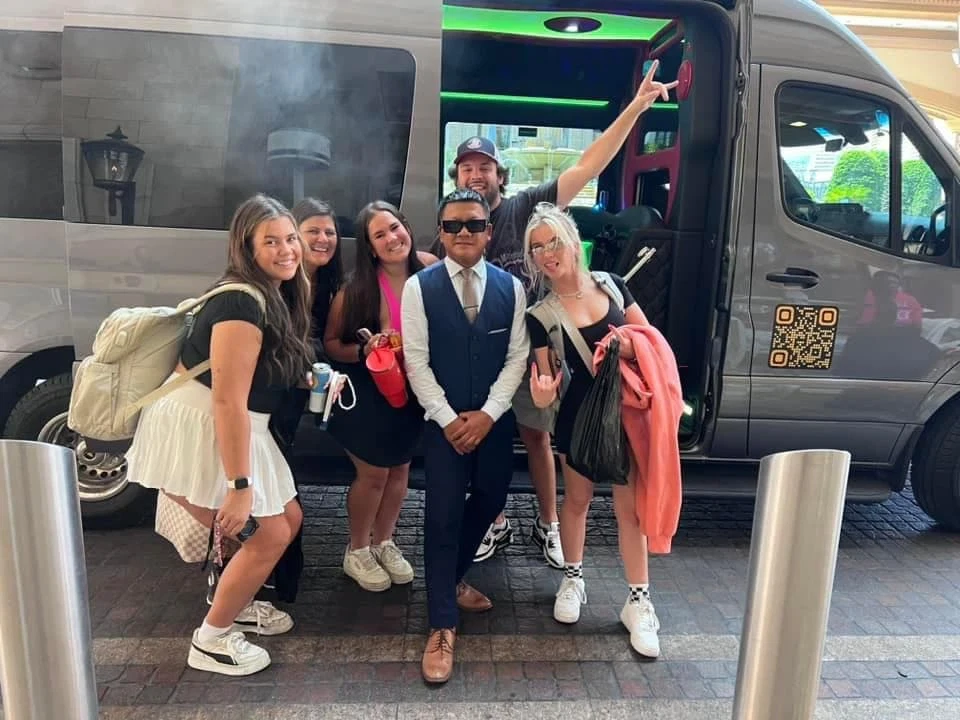
Planning group transportation in Mercer County? Learn what party bus rentals actually cost, which safety standards matter, and how to choose the right vehicle size for your event.
Share:

Summary:
You’re coordinating transportation for a group, and the last thing you need is surprise fees, unreliable service, or safety concerns. Party bus rentals solve the logistics of getting everyone to the same place at the same time, but the market is full of companies that aren’t transparent about what you’re actually paying for or who’s behind the wheel. This guide walks you through what matters: real pricing, safety credentials that go beyond the minimum, vehicle options that fit your group size, and the questions you should ask before booking. Let’s start with what these services actually cost and why the price varies more than you’d expect.
Party bus pricing isn’t one-size-fits-all, and the gap between a rough estimate and your final bill can be significant if you don’t understand what drives the cost. In Mercer County, NJ, you’re looking at $150 to $300 per hour depending on vehicle size, timing, and what’s included. Most companies require a 3 to 6-hour minimum, so even a short event means you’re paying for a block of time.
Here’s what should be included in that rate: the vehicle itself, a professional chauffeur for your entire reservation, standard tolls, taxes, and gratuity. If a company quotes you a base rate but adds fees for these basics later, that’s a red flag. Smaller buses that fit 14 to 20 passengers typically start around $200 per hour. Larger vehicles accommodating 25 to 45+ passengers run $300 to $500 per hour, though Mercer County rates tend to fall on the lower end of that range compared to major metro areas.
The math matters when you’re splitting costs. If you’ve got 20 people sharing a $200-per-hour bus for four hours, that’s $40 per person. Compare that to everyone booking individual rideshares—especially with surge pricing late at night—and the party bus often comes out cheaper while keeping your group together and eliminating the designated driver problem.

Several factors push party bus rental prices higher or lower, and knowing them helps you budget accurately. Vehicle size is the most obvious one. A bus built for 14 passengers costs less per hour than one designed for 45, but here’s the catch: if your group of 20 could fit comfortably in a smaller bus, don’t pay for a 45-passenger vehicle just because it’s available. You’re wasting money on unused capacity.
Timing plays a bigger role than most people realize. Weekend rates—especially Friday and Saturday nights—run higher than weekday bookings because demand is concentrated there. Peak seasons hit even harder. Prom season runs April through June in New Jersey, and wedding season peaks May through October. During these windows, expect rates to jump 10 to 30 percent, and availability tightens fast. If your event falls during these periods, booking 3 to 4 months ahead isn’t overkill; it’s smart planning.
Rental duration affects your total cost but not always in a linear way. Most companies price by the hour with minimums, but some offer slight discounts for longer bookings—say, 8 hours instead of 4. Ask about this if your event runs all day or involves multiple stops across a wide area. Your route matters too. If you’re staying within Mercer County—Trenton to Princeton to Hamilton—you’re typically covered under standard rates. Long-distance trips to Atlantic City, Philadelphia, or New York metro areas may trigger mileage fees or require overnight driver accommodations, which you’ll pay for.
Amenities are usually baked into the base price for standard features: leather seating, LED lighting, climate control, Bluetooth-connected sound systems, flat-screen TVs, and bar areas. If you want something beyond that—like a bus with an onboard restroom or premium audio upgrades—expect to pay more. The key is knowing what’s standard versus what’s an add-on before you commit.
Here’s what separates transparent pricing from companies trying to nickel-and-dime you: we tell you upfront what’s included and what costs extra. If a quote seems too good to be true, it probably is. Ask specifically whether tolls, taxes, gratuity, and fuel surcharges are included or added later. Companies that hide fees until the final bill are counting on you being too committed to walk away at that point.
Everyone wants a good deal, but “cheap party bus rentals” can mean two very different things. It can mean competitive pricing from a company that runs efficiently and passes savings to customers. Or it can mean a company cutting corners on safety, maintenance, and driver qualifications to offer the lowest rate. Your job is figuring out which one you’re dealing with.
Price shopping makes sense, but the lowest quote shouldn’t be your only decision factor. Ask what that price includes. Is the driver licensed and background-checked? When was the vehicle last inspected? Does the company carry proper insurance? Are gratuity and tolls included, or will those hit your bill later? If a company can’t answer these questions clearly or dodges them entirely, that cheap rate isn’t worth the risk.
Here’s a better approach: get quotes from multiple companies and compare what’s included at each price point. A company charging $200 per hour with everything included is a better deal than one charging $150 per hour but adding $30 per hour in “fees” you didn’t see coming. Look for companies that provide written quotes detailing exactly what you’re paying for. Verbal estimates are worthless when the bill arrives.
Maintenance standards separate reliable operators from ones that’ll leave you stranded. Buses that undergo regular inspections—monthly or quarterly depending on usage—are less likely to break down mid-trip. Ask how often their fleet is serviced. Companies serious about reliability will tell you. Ones that aren’t will change the subject.
Driver quality matters more than most people consider until something goes wrong. A chauffeur who knows Mercer County roads, understands venue drop-off procedures, and can handle traffic without panicking is worth paying for. Someone who’s just passed a basic driver’s test and is winging it with GPS isn’t. Ask about driver qualifications. Commercial licensing, background checks, and local route knowledge should be standard, not optional upgrades.
The “cheap” option that shows up late, has a driver who doesn’t know where they’re going, or breaks down halfway through your event isn’t cheap at all. It’s expensive in ways that don’t show up on the invoice: ruined plans, stressed guests, and an event you’ll remember for the wrong reasons. Pay for reliability, transparency, and professionalism. The difference between a mediocre service and a good one is usually $20 to $40 per hour. Split among your group, that’s negligible. The difference in experience is not.
Want live answers?
Connect with a Jersey Car & Limo expert for fast, friendly support.
Party buses work great for celebrations where amenities and atmosphere matter. Charter buses solve a different problem: moving larger groups efficiently for events where transportation is functional, not festive. If you’re coordinating a corporate outing, sports team travel, family reunion, or field trip, charter buses offer capacity, comfort, and cost-effectiveness without the nightclub-on-wheels setup.
The distinction matters because you’re paying for different things. Charter buses prioritize seating capacity, luggage space, and long-distance comfort. Party buses prioritize entertainment features and social layouts. If your group of 40 needs to get from Mercer County to a conference in Philadelphia, you don’t need LED lighting and a bar area. You need comfortable seats, climate control, and a professional driver who knows the route. Charter buses deliver that at a lower per-person cost than party buses because you’re not paying for amenities you won’t use.
Pricing for charter buses typically runs lower per hour than party buses of similar size—think $150 to $250 per hour depending on capacity and distance. For full-day rentals or multi-day trips, many companies switch to daily rates rather than hourly, which can offer better value if you’re traveling long distances or need the bus for extended periods. A full-day charter might run $1,300 to $2,200 depending on the vehicle and itinerary, while minibuses for smaller groups cost $1,000 to $1,400 per day.

Coach buses—also called motorcoaches—are the workhorses of group transportation . They’re built for capacity and distance, accommodating 45 to 56 passengers with undercarriage luggage storage, reclining seats, onboard restrooms, and climate control. If you’re moving a large group for a wedding, corporate event, or sports team travel, coach buses offer the most cost-effective per-person rate.
In Mercer County, coach buses make sense for events where you need everyone to arrive together but don’t need the party atmosphere. Wedding shuttles between ceremony and reception venues, corporate conference transportation, or family vacation travel all fit this category. You’re paying for reliability, comfort, and professional service—not entertainment features you won’t use.
Booking coach buses requires more lead time than smaller vehicles because availability is limited, especially during peak seasons. For corporate events or weddings during busy months, reserve at least 4 to 6 weeks ahead. Last-minute bookings 2 weeks or less from your event often come with premium pricing due to limited availability, assuming you can even find a bus at all.
Driver qualifications matter just as much for coach buses as party buses. You want someone with commercial licensing, clean driving records, and experience handling large vehicles in various traffic conditions. Coach buses require different skills than standard passenger vehicles, and the driver’s experience directly impacts your group’s safety and comfort. Ask about driver training, years of experience, and whether they’re familiar with your specific route and destinations.
Route planning is more critical for coach buses than smaller vehicles. If your itinerary involves multiple stops, narrow streets, or venues with limited access, communicate this upfront. We scout routes ahead of time, identify potential issues, and plan accordingly. Amateur operators show up and hope for the best, which leads to delays, missed turns, and frustrated passengers.
Amenities on coach buses vary by vehicle age and operator. Standard features include reclining seats, overhead storage, climate control, and PA systems. Upgraded coaches may offer WiFi, power outlets, onboard restrooms, and entertainment systems. If specific amenities matter for your trip—say, WiFi for a corporate group that needs to work during travel—confirm these are available when you book, not when the bus arrives.
Charter bus pricing follows similar patterns to party buses but with different cost drivers. You’re still paying for vehicle size, rental duration, timing, and distance, but the rate structure often shifts for longer trips. Short trips within Mercer County or to nearby areas typically bill hourly with 3 to 5-hour minimums. Longer trips—say, a day trip to New York City or a weekend in the Poconos—usually switch to daily or mileage-based pricing.
Daily rates for charter buses average $1,300 to $2,200 depending on vehicle size and amenities. Minibuses for smaller groups (18 to 30 passengers) run $1,000 to $1,400 per day. These rates typically include the vehicle, driver, standard tolls, and fuel for distances up to 150 miles or so. Trips beyond that may trigger additional mileage fees, usually $2 to $5 per mile depending on the company and region.
Overnight trips add complexity because federal regulations prohibit commercial drivers from operating more than 10 consecutive hours without at least 8 hours off. If your charter involves overnight travel, you’ll need to provide hotel accommodations for the driver. This isn’t an optional expense; it’s a legal requirement. Factor this into your budget when planning multi-day trips.
Timing affects charter bus pricing just like party buses. Weekday rentals typically cost less than weekends. Off-peak seasons—January through April and September through December, excluding holidays—offer better rates than peak travel periods. If your event date is flexible, shifting it to a weekday or off-peak month can save hundreds of dollars.
Hidden fees are just as common with charter buses as party buses. Ask specifically whether your quote includes parking fees at destinations, tolls for your entire route, driver gratuity, and fuel surcharges. We include these in our pricing; others add them to your final bill. Get everything in writing before you commit. A detailed written quote protects you from surprise charges and gives you something to reference if disputes arise later.
Cancellation policies vary widely among operators. Some allow free cancellations up to a certain date, others charge partial fees, and some require full payment regardless of when you cancel. Read the cancellation terms carefully before booking, especially for expensive multi-day charters. If your event might change dates—say, a corporate conference that could be rescheduled—look for companies with flexible cancellation policies even if their rates are slightly higher. The peace of mind is worth it.
Shuttle services solve a specific transportation problem: moving groups repeatedly between fixed locations on a predictable schedule. Unlike party buses or charter buses rented for a block of time, shuttles run continuous loops—picking up passengers at Point A, dropping them at Point B, then returning to Point A for the next group. This works perfectly for weddings, corporate events, airport transfers , and any situation where guests arrive in waves rather than all at once.
The economics of shuttle services differ from traditional bus rentals. Instead of paying for a vehicle to sit idle while your group is at an event, you’re paying for active transportation time. This often costs less overall because you’re not paying for downtime. For a wedding, shuttles can run continuous loops between hotels and your venue, ensuring guests arrive throughout the cocktail hour without needing multiple buses sitting unused.
Shuttle buses come in various sizes to match your needs. Smaller shuttles accommodate 10 to 20 passengers and work well for intimate events or corporate airport transfers. Mid-size shuttles handle 20 to 30 passengers, ideal for wedding guest transportation or employee shuttles. Larger shuttles up to 35 to 40 passengers suit high-volume situations like conferences or large corporate events. Match your shuttle size to your actual passenger volume; running a 40-passenger shuttle for 15 people wastes money and looks empty.
Article details:
Share:
Continue learning: