
Summer airport travel doesn't have to mean chaos. Discover how flight tracking, smart timing, and the right vehicle choice turn vacation transportation into the easiest part of your trip.
Share:

Summary:
You’ve booked the flights, reserved the hotel, and packed the bags. Then you remember: someone still has to get everyone to the airport on time, with luggage, without missing the flight, ideally without turning the first day of vacation into a parking lot nightmare.
Summer travel from Mercer County, NJ to Newark, Philadelphia, or Atlantic City airports means dealing with peak season crowds, unpredictable delays, and the question of whether driving yourself actually saves money once you factor in a week of parking fees. The difference between a smooth start and a stressful scramble often comes down to understanding when traffic hits hardest, how flight delays cascade through your plans, and which transportation option actually makes sense for your group size and budget.
Summer 2026 brings the same operational pressures that have defined recent peak seasons—higher passenger volumes, staffing constraints, and weather patterns that turn minor delays into cascading problems. Newark sees wait times jump 30 to 50 percent longer during July and August compared to off-peak months. Security lines that move in 15 minutes during February can stretch to 45 minutes on a Thursday evening in July.
The timing matters more than most people realize. If your flight leaves at 7 AM, you’re hitting morning rush both on the road and at the checkpoint. Departures between 5 and 8 AM see the heaviest security congestion. The afternoon builds again from 3 to 7 PM as business travelers and evening flights converge.
Knowing these patterns helps, but summer travel adds variables you can’t always predict. A thunderstorm delay in Atlanta affects your Newark departure two hours later. Construction on the Turnpike that wasn’t there last month adds 20 minutes you didn’t budget for. Your rideshare driver cancels because airport pickups during peak hours aren’t worth the hassle to them.
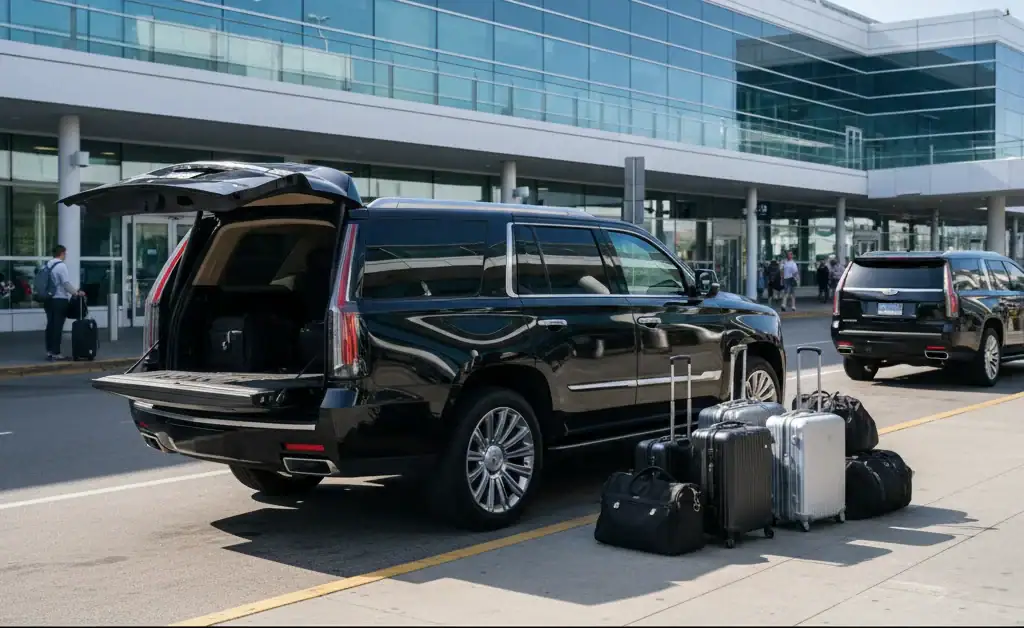
Newark’s traffic rhythm follows a predictable but unforgiving schedule. Early morning departures mean leaving Mercer County by 4 or 4:30 AM to account for security wait times, check-in, and the buffer you need when missing the flight isn’t an option. That’s assuming normal traffic. Summer Fridays and Sundays see heavier volume as weekend travelers pack the roads alongside regular commuters.
The drive itself from central Mercer County to Newark typically runs 45 to 60 minutes without traffic. Add rush hour and you’re looking at 75 to 90 minutes. The New Jersey Turnpike doesn’t care that you have a flight to catch. Neither does the accident that just closed two lanes near Exit 9.
Philadelphia presents different challenges but similar timing pressures. The drive runs shorter from most Mercer County locations—30 to 50 minutes in clear conditions—but I-95 congestion and the approach to PHL terminals can add unexpected delays. Atlantic City offers the most predictable drive times, though summer shore traffic on the Parkway introduces its own complications on Friday afternoons and Sunday evenings.
What changes the equation is whether your transportation adjusts to real conditions or operates on the schedule you hoped for when you booked three weeks ago. We make these runs daily and know which routes see construction, where traffic typically backs up, and how much buffer time actually works for your specific departure time and airport. We leave earlier when conditions require it. We take alternates when the usual route is jammed.
That local knowledge matters more during summer peak season than any other time of year. You’re not just fighting your own schedule. You’re competing with everyone else trying to start their vacation, and the infrastructure doesn’t expand to accommodate the surge.
Summer flight delays aren’t occasional inconveniences. They’re operational realities that affect planning for anyone coordinating ground transportation with air travel. Weather systems that develop over the Midwest affect Newark departures by mid-afternoon. Staffing constraints that seemed resolved in March resurface when passenger volumes spike in July. Your 6 PM arrival becomes 8:30 PM, and suddenly the transportation you arranged needs to adjust.
Flight tracking technology solves a problem most travelers don’t think about until they’re standing in baggage claim trying to coordinate a pickup via text message. Our system monitors your actual flight status from takeoff through landing. If you’re delayed, we know before you finish reading the gate agent’s apology. If you land early, the adjustment happens automatically.
This matters most when you’re traveling with family. Kids are tired. You have luggage. The last thing you want is standing outside the terminal trying to request a ride while managing bags and cranky passengers. Flight tracking means your driver is positioned for your actual arrival time, not your scheduled one.
The same technology works in reverse for departures. If summer thunderstorms are forecast for your departure window, we account for potential airport congestion and build in appropriate buffer time. If traffic conditions change between booking and your actual travel date, the pickup time adjusts.
Rideshare apps don’t do this. You request the ride when you’re ready, then hope a driver accepts quickly and doesn’t cancel when they see airport traffic. During Newark’s summer peak hours, that hope doesn’t always work out. The difference becomes obvious when your flight arrives at 11 PM after a delay and you’re choosing between pre-arranged service that’s already waiting versus opening an app and watching the estimated pickup time bounce between 8 minutes and 25 minutes while you stand in a crowded pickup zone.
For families managing vacation logistics, this reliability gap represents the difference between ending your trip smoothly and adding one more frustration to an already long travel day. The cost difference between pre-arranged service with flight tracking and on-demand rideshare during peak times often disappears entirely when surge pricing kicks in, but the reliability difference remains.
Want live answers?
Connect with a Jersey Car & Limo expert for fast, friendly support.
The math on vacation transportation changes completely when you’re moving more than two people. A couple can squeeze into most ride options without much thought. A family of five with a week’s worth of luggage faces different constraints. And groups of eight to twelve trying to coordinate airport transportation discover that the obvious solutions don’t actually work.
Three separate rideshares mean three separate pickups, three drivers who might be running different levels of late, and three conversations about where exactly you’re meeting and whether everyone has the right terminal. It also means three separate fares that add up faster than most people calculate before they start booking.
One vehicle that fits everyone changes the entire dynamic. You leave together. You arrive together. The reunion starts when you get in the vehicle, not after everyone finally makes it to the hotel an hour apart.

Our SUVs work well for families up to six passengers. You get space for luggage without cramming bags on laps. Everyone sits comfortably. The vehicle feels like what you’d choose for a road trip, not what you settled for because nothing else was available.
The capacity matters more than it seems. Summer vacation means more than carry-ons. You have checked bags, beach gear, maybe sports equipment or special items that don’t fit in standard luggage. An SUV accommodates this without turning packing into a spatial puzzle.
For groups beyond six, our Sprinter vans become the logical choice. These vehicles seat up to fourteen passengers with luggage space that actually works for real travel. Extended families traveling together, friend groups coordinating a vacation, or corporate teams heading to a conference—the Sprinter handles group sizes that would otherwise require multiple vehicles.
The cost comparison gets interesting here. Two or three rideshares for a group of ten runs $150 to $240 one way during normal times, more during peak demand. A single Sprinter van for the same group costs less than the combined rideshare total, and you’re not managing multiple vehicles, multiple drivers, or the coordination overhead that comes with split transportation.
This becomes even more compelling on the return trip. After a week of vacation, the last thing anyone wants is complicated logistics getting home from the airport. One vehicle, one pickup, everyone home at the same time. The simplicity alone justifies the choice, but when it also costs less than the alternative, the decision makes itself.
Families traveling from Mercer County to Newark for a week-long vacation can park one car for $245 to $315, or book round-trip professional transportation for comparable or lower cost while eliminating the parking lot shuttle, the walk across the garage with luggage, and the security concerns about leaving a vehicle unattended for a week. For two cars, the parking cost doubles while the transportation cost stays the same—one vehicle handles the whole group.
Family reunions and group vacations often mean people arriving on different flights. Someone’s coming from the West Coast. Another group is flying in from Florida. Local family members are driving in. Coordinating all these arrivals at a central location creates logistics that feel more complicated than the vacation itself.
We handle this kind of coordination as standard operating procedure. You provide the flight details for each arrival. We track all the flights, adjust for delays, and manage the pickup sequence. If one flight lands early and another runs late, the coordination happens behind the scenes without requiring you to manage it via group text while you’re mid-flight.
This matters most when you’re trying to get everyone to a vacation rental, a hotel, or a central gathering point without the hassle of multiple pickup attempts or people waiting around for hours because flights didn’t align perfectly. The alternative—everyone finding their own way and meeting up eventually—works until someone’s rideshare gets canceled, someone else can’t figure out the rental car return, and the group that was supposed to arrive together trickles in over four hours.
The vehicle capacity becomes crucial here too. If you’re picking up arrivals from multiple flights and combining them into one transport to the final destination, you need a vehicle that actually fits everyone plus all the luggage they’ve accumulated. A Sprinter van manages this where smaller options force you into multiple trips or complicated transfer logistics.
For Mercer County residents hosting family from out of state, this coordination capability means you can arrange transportation for your guests without personally making multiple airport runs. We handle the pickups, track the flights, and deliver everyone to your location. You focus on getting the house ready and planning the actual reunion instead of spending half the day driving back and forth to Newark.
The same logic applies to departures. When everyone needs to get back to the airport but flights leave at different times, coordinating multiple drop-offs becomes the challenge. We manage the schedule, ensure everyone makes their flight with appropriate buffer time, and handle the variations in departure timing without requiring you to organize a carpool spreadsheet.
Summer vacation transportation works best when you plan for the actual conditions you’ll face, not the idealized version where everything runs on time and traffic cooperates. Newark’s peak season congestion, flight delays that affect coordination, and the real cost of parking for a week all factor into decisions that seem simple until you’re actually managing them.
The difference between smooth travel and unnecessary stress often comes down to whether your transportation adapts to changing conditions or operates on assumptions that don’t survive contact with summer airport reality. Flight tracking, professional drivers who know local routes and traffic patterns, and vehicles sized appropriately for your actual group all contribute to outcomes that work.
For families and groups traveling from Mercer County, NJ, the choice isn’t just about getting to the airport. It’s about starting your vacation without the friction that comes from coordination problems, parking hassles, or transportation that doesn’t account for how summer travel actually operates. When you’re ready to plan your next trip, we handle the ground transportation details that make the difference between a rough start and a smooth one.
Article details:
Share:
Continue learning: